



If you’re like me, you’ll spend a few minutes or maybe a few hours this holiday season with a parent, sibling, adult child or family relation asking a simple question: How are you? But, regardless of how casually you ask, it won’t be a casual, rote question.
To the contrary, you’ll need to know: How are things actually going for this person who matters to you? And: what could or should you do if the honest answer is that they need your help? If you’re in your 40s, 50s, 60s or 70s, you may be caring in two directions at once for
a parent who is slowing down and who lives either a few doors away or across the country
an adult child who is struggling with any number of crises brought on by chronic health issues, addiction, divorce, parenting, disability, finances or career struggles
Michelle, Nancy, Ellen: 3 different caregiver realities
Who among us doesn’t know 3, 5, or a dozen people who have become caregivers to a parent or grown child? I can name 7 friends who are now or were recently in the thick of caregiving. This week, I spoke to three of them, and each of their experiences is detailed in the 25-page caregiver playbook below, which includes no fewer than 86 links to credible caregiving information and resources.
Michelle, an old and dear friend from Pittsburgh, told me she followed her mother’s health sometimes by phone, from another state, and sometimes from across town, in Massachusetts, where her mother lived. Michelle said she learned to listen for the details that don’t add up, the telltale signals that are cause for asking deeper questions of a parent who may not want to answer them.
I also spoke to Nancy, in Southern California, whom I’ve known since Duran Duran topped the Billboard charts, about what she’s learned from caring for her elderly mom who lives capably alone but stopped driving 10 years ago. One of Nancy’s lessons learned: don’t forget to make time for yourself, to avoid resentment.
I also spoke to Ellen, whom I’ve known since high school, about the lessons that came from caring for her mom, which she called a privilege and an exercise in negotiating care that was necessary and feasible, given her mom’s preferences and proclivities.
“Caregiving is both very valuable, and it’s a gift to do it, but it’s not easy,” said Ellen, who, in addition to being an old friend, is also the director of policy & government affairs for the Illinois Hospice & Palliative Care Organization. “It’s challenging on the psyche, and it’s generally pretty disruptive to your home life. You have to make trade-offs.”
“At this age, we’re more free, and now your elderly parents may need more attention,” Nancy, who has two grown children, told me. “But this is also a time in our lives when we may have more time to ourselves and time to pursue our own goals.”
“It’s crazy how every single family has to figure things out by themselves,” Michelle said in our conversation. “It's psychological, it's emotional, sometimes it’s physical. And for many people there isn't much societal support.”
They’re 100% right, of course. All of them. Maybe you even recognize a bit of yourself or your experience—or that of your spouse or sibling, or caregiving adult child—in their words.
The world needs more of Nancy’s, Ellen’s and Michelle’s condensed wisdom and first-hand expertise. Along with links—lots and lots of links—to dozens of organizations, agencies and online resources that can serve as lifelines to people thrust into the critically important but often disorienting role of caregiver.
Why does every single family—to Michelle’s point above—have to figure this out for themselves? Shouldn’t there be an instruction manual of sorts? A guide to resources? A caregiver’s playbook?
And in case you were wondering: Yes, I’ve seen the “Sister” sketch on SNL. There’s a reason it’s spawned a national conversation about caring for elderly parents.
A caregiving playbook: 25 pages with 86 links & resources
The SNL sketch hit a nerve. Most caregivers start without reliable information, without a sense of what they know and don't know—and what they don't know they don't know—and without a plan for finding out.
To be sure, free eldercare guides exist. AARP gives away a family planning guide that includes a glossary, a resources section and a goals-and-needs checklist. (The most recent printing of AARP's free planning guide I could find is dated June 2021, and it still relies on census data from 2014.) The National Institute on Aging's free handbook covers home care, long-term care facilities, costs and coordinating medical care and includes worksheets and checklists.
How this playbook is different
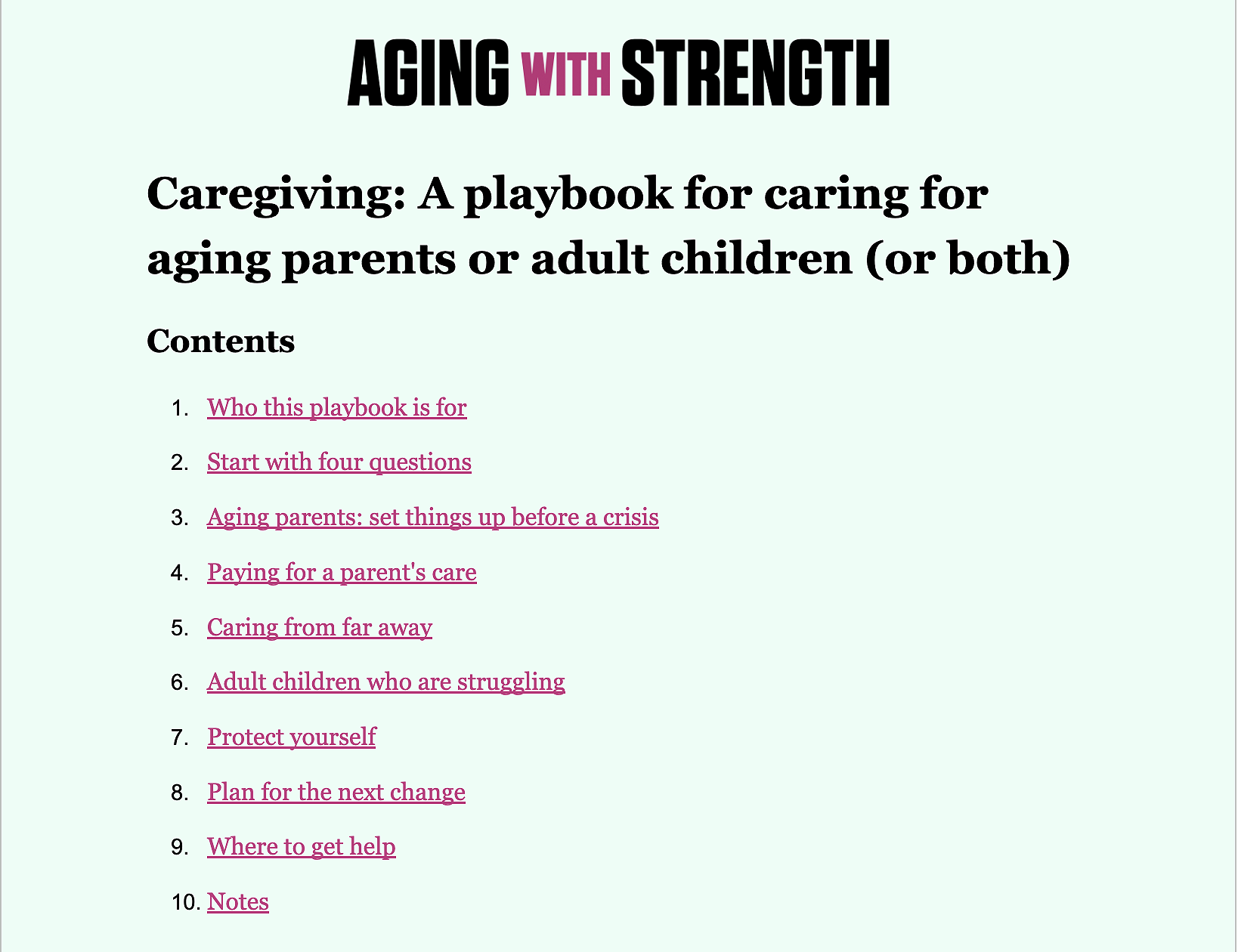
The 25-page caregiving playbook I’ve created is built from dozens of current, credible resources and reporting—my own and from national media, including The New York Times, The Wall Street Journal, The Washington Post, NPR, KFF Health News and other organizations. It provides a unique practical, non-technical understanding of how to build a caregiving plan for a parent or adult child who needs help.
Also, unlike the two guides I mentioned above, this caregiving playbook:
covers the other direction of care: a grown son or daughter with a mental illness, an addiction, a disability or bills they can't pay
explains how Medicaid can collect from a parent's estate after death, why gifts made in the five years before a Medicaid application can delay coverage, and why you should ask at every hospital stay whether your parent is admitted or under observation
footnotes its facts, with 77 numbered notes linked to their sources
is current to 2026, including rule changes from the past two years on hospital appeals and ABLE savings accounts
summarizes what national reporters have found, including:
two WSJ articles published this week, one on what eldercare costs families and one that follows a home aide at work
a Washington Post analysis of what Americans spend on care in the last decade of life
the "Dying Broke" series by KFF Health News and The New York Times
NPR's reporting on parents who support grown children
That reporting supplies real cases, like the Chicago man who runs his mother’s dementia care in a small Indiana town from four hours away, at up to $7,000 a month, and the Pennsylvania aide who charges at least $30 an hour and often sends new families elsewhere.
What this playbook comprises
I made this playbook so you and I have less to figure out by ourselves. It covers the basics quickly and spends its time on what families tend to learn too late. A few examples:
three ways to get a parent who refuses help to accept it
the Medicare program that gives dementia families a care navigator and a 24-hour help line
why a parent who pays a relative for care without a written agreement can inadvertently delay their own Medicaid coverage
how family members can get paid for caregiving through Medicaid and the VA
what to send your adult child’s psychiatrist when privacy law keeps the doctor from telling you anything
a family training method that, in one small trial, helped 64% of families get a relative into addiction treatment vs. 30% for a staged confrontation
the housing rule that can cut a disabled adult child’s SSI check by as much as $351 a month, and how to avoid the cut
The playbook has three parts: Part I is about caring for your aging parents; Part II is about caring for your adult children; Part III is about how to protect yourself. Each section ends with a short list of steps to consider taking now.
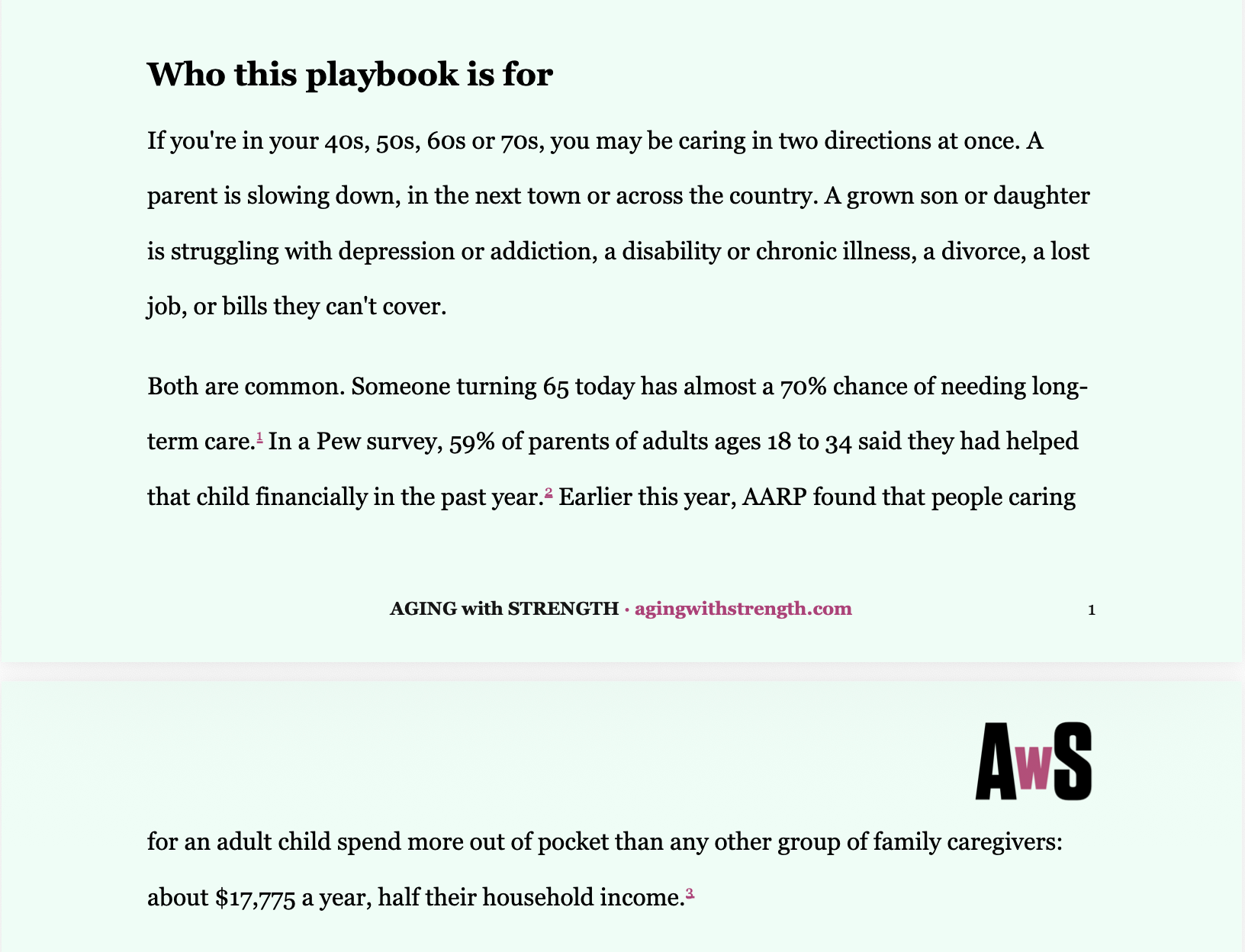
This full 25-page playbook, below, is a living resource that I expect to add to and build out over time. It’s available to paying subscribers. If you have constructive feedback or suggestions about what to add, leave out or improve, I’d love to hear them.
Happy American Thanksgiving! (Canadian readers celebrated their Thanksgiving weeks ago.) As Stephen Dubner says, signing off from his Freakonomics Radio episodes: “Take care of yourself and, if you can, someone else, too.”