



Happy Friday, everyone. I’ll keep this short, because there’s more to come from AGING with STRENGTH this weekend, on counterintuitive strength training routines that build muscle and increase neuromuscular fitness after 50.
A recent study got a lot of attention from major media (and from some Substacks) because its main finding was that genes account for about 55% of longevity—more than double the 20% to 25% influence that scientists believed genes had on human lifespan.
But what virtually everyone else failed to report is that, according to the study’s authors themselves, that 55% figure is probably low, and that their research suggests that lifespan may be 70% or more hereditary.
In case you missed it…
Published in the journal Science, the study used mathematical models to analyze historical data from three sets of twins in Scandinavia—including twins raised apart—and from siblings of centenarians in the United States. Those models estimated that if you could eliminate all deaths from accidents, infections and other external causes, genetics would account for about 55% of the remaining variation in how long people live.
But halfway through the study, there’s this Easter egg: The researchers also ran a simpler, statistical analysis of their data that found heritability of longevity to be closer to 70%, perhaps even more. That would mean that genes are roughly three times more influential in lifespan than previously thought.
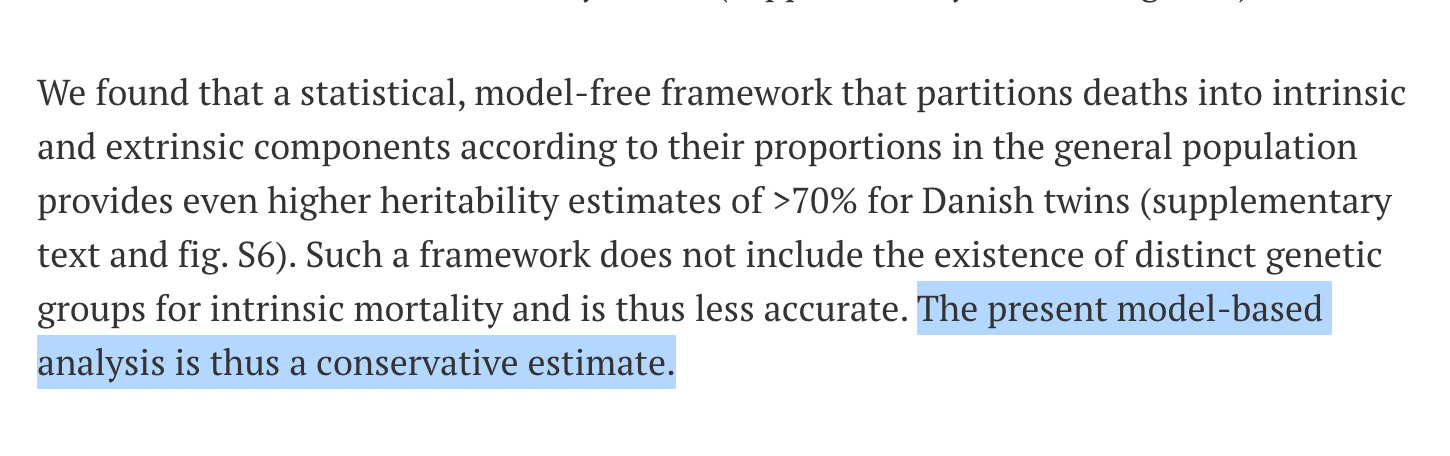
In this excerpt, the authors are essentially saying: our careful, conservative estimate is 55%, but a cruder method suggests it could be 70% or higher. The true answer is probably somewhere in that range.
Here’s Figure S6, from the study’s supplementary text, that researchers noted in the excerpt pictured above:
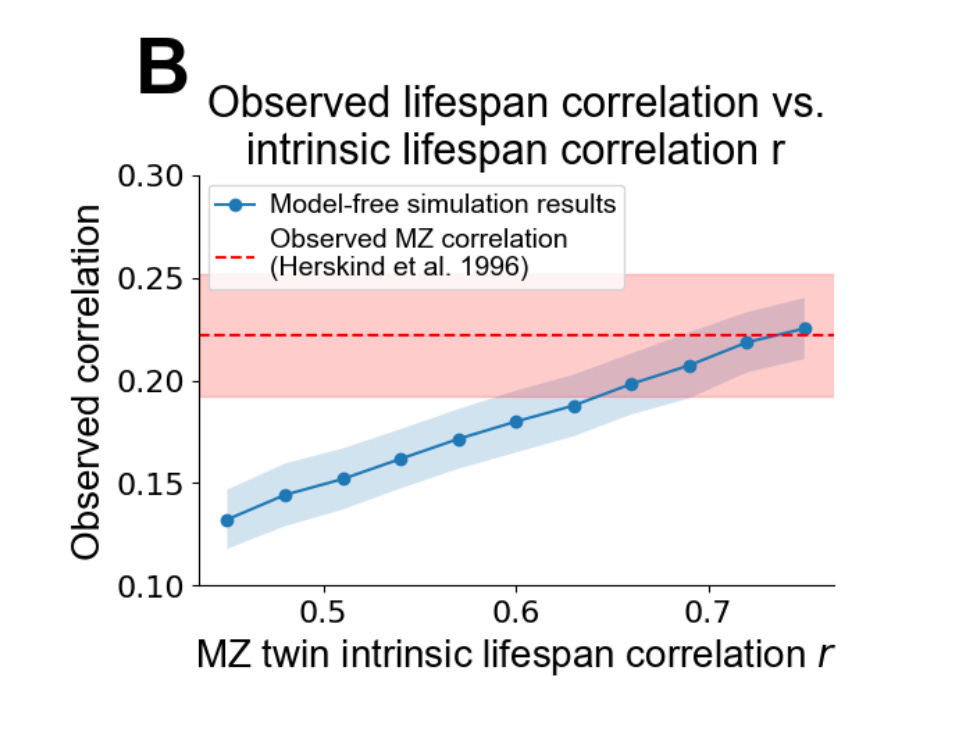
If 55% genetic influence on lifespan is likely a conservative conclusion, that’s significant and worth reporting. The 70% figure from the study’s model-free analysis appears only in the paper itself. No journalist picked it up.
While I’m picking on journalists…
…let’s also recognize what I originally failed to mention about longevity.
One of the most gratifying parts of writing AGING with STRENGTH is that its readers are incredibly sharp and engaged. After I published this article, Irina Strobl made this excellent point, here shown as a screen shot:
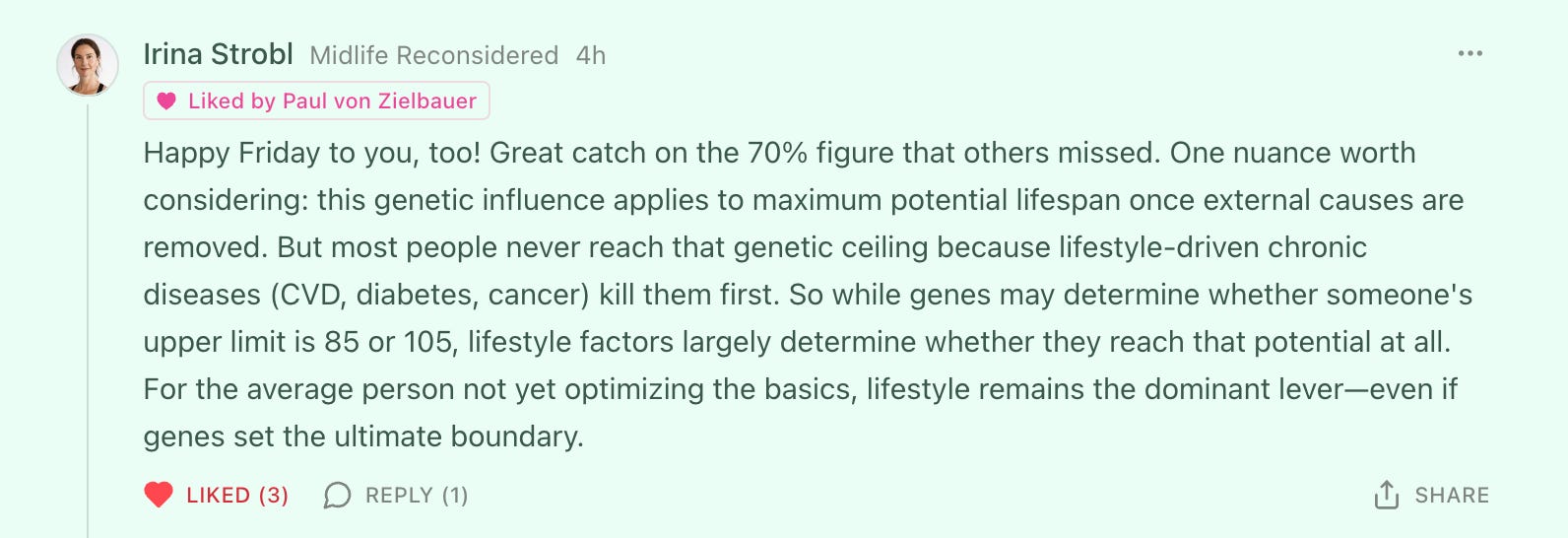
Genetics can give you a shot at extreme longevity, but you have to survive long enough to access that potential: “Lifestyle remains the dominant lever.” Well said, and thank you for making this important point.
Happy Friday to you, too! Great catch on the 70% figure that others missed. One nuance worth considering: this genetic influence applies to maximum potential lifespan once external causes are removed. But most people never reach that genetic ceiling because lifestyle-driven chronic diseases (CVD, diabetes, cancer) kill them first. So while genes may determine whether someone's upper limit is 85 or 105, lifestyle factors largely determine whether they reach that potential at all. For the average person not yet optimizing the basics, lifestyle remains the dominant lever—even if genes set the ultimate boundary.
Cool article - I remember this paper from Twitter.
I work in genetics and a core nuance people miss about this the 50% figure is heritability which actually measures why people differ (variance), not what determines any one person's outcome.
If everyone smoked, ate a bad diet, and never exercised, heritability would go UP (only genetic differences left). If you had a society where everyone lived completely differently (varied diets, exercise habits, smoking rates) heritability would go DOWN because environment explains more of the variation.
tl;dr:
- 50% heritability ≠ your lifespan is half predetermined.
- 50% heritability = genes explain half of why people differ.