


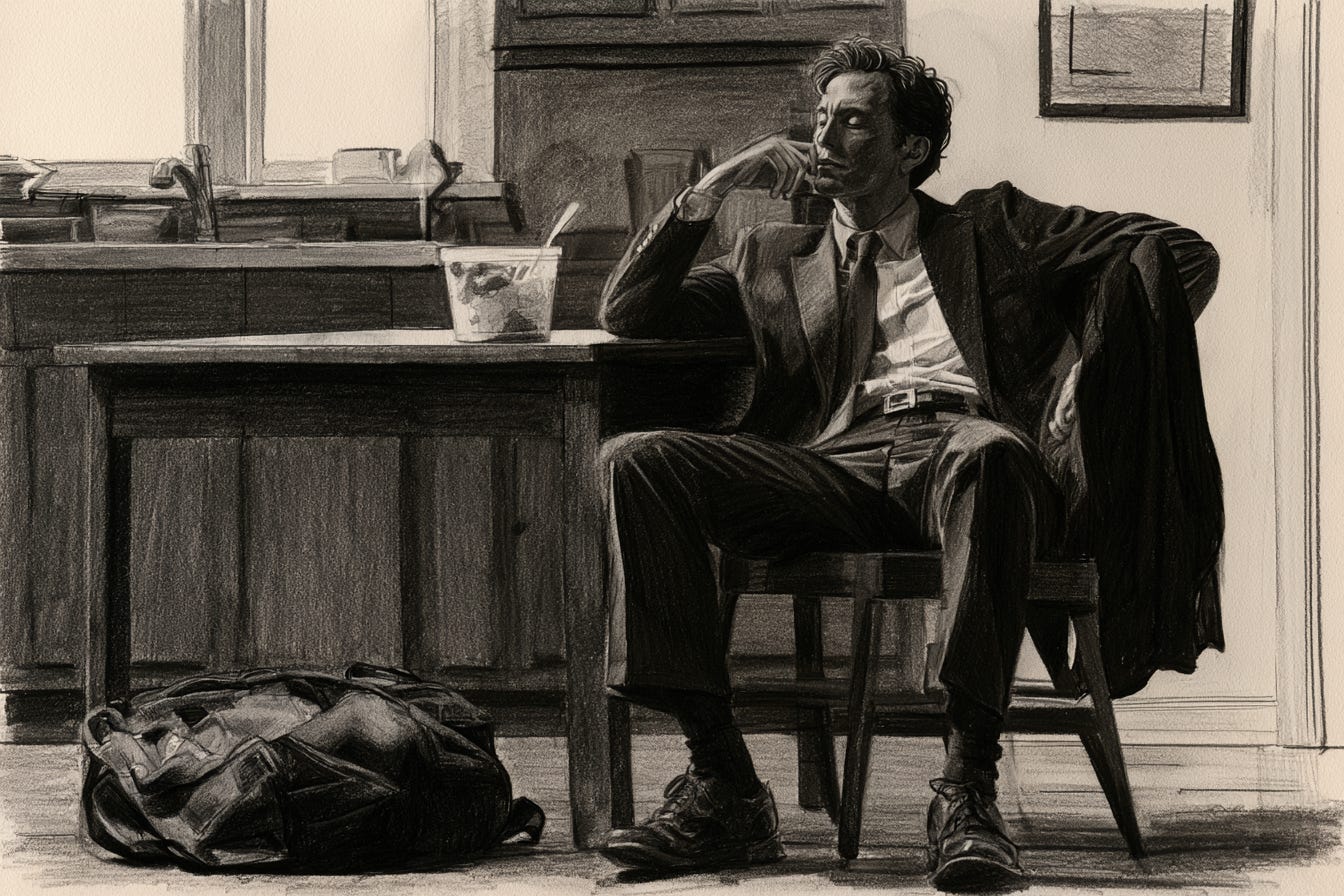
If you can remotely relate to the following scenario, this post is for you:
After training regularly for weeks or months, you’ve made steady gains in your strength, muscle, VO2 max, flexibility, range of motion or body shape—or whatever athletic mission you’ve been pursuing for what feels like half your life. You’re seeing the improvement in the mirror and feeling it in your muscles and your daily spirit. You’re stoked that, even at your stage of older adulthood, you’re getting noticeably stronger. Other people notice, too. And then it happens: work, travel, injury or family obligations disrupt your training schedule, and before you know it your last real workout was two weeks ago. You feel your hard-won gains slipping away with every additional day away from training. Muscles that were hard now feel softer. As distance from your last workout grows, frustration filters from your head into your heart and creeps into your bones, because you know what this slip back toward your athletic baseline means: starting over, again. Climbing the hill, again. Succumbing to the siren of “what’s the use?” you allow yourself to chow a slice of cake or bowl of ice cream you wouldn’t have touched a couple weeks ago, as a form of comfort from the cognitive and physical dissonance that comes from knowing you were right there, ahead of the athletic curve, pushing your upper limits. But now, what was hard is now not only soft, it’s starting to eat cake and ice cream. You wonder if this is two steps forward & one back—or vice-versa.
These liminal spaces between what feels like success and failure can feel momentous, because a body and brain that’s 50, 60 or 70 years old is all too familiar with the psychocognitive strength required to reboot one’s athletic routine. Instead of that next session starting at the advanced level you’d worked so hard to reach, you’ll need to summon willpower to train at a lower level, to avoid risking injury.
In other words, you need strength to not only get back on your horse but also to avoid riding it too hard, too quickly. That double load can feel overwhelming.
(This state of being, by the way, is the inverse of another kind of athletic liminal space that exists just before you break through to a new level of athletic performance—when you can feel the gains you’ve been making are about to produce a significant new result. Older athletes may inhabit both spaces in the same month.)
I’ve spent enough time in each of these liminal spaces to know, as Jim McKay’s 1970s Wide World of Sports introduction put it, the thrill of victory and the agony of defeat. Victory was easier to achieve before career, house, kids, money and age became countervailing forces. Defeat becomes more frequent with time, it seems. Whether it becomes more demoralizing over time, however, is a choice we make.
When my strength gains have slipped away, as they have many times for many frustrating reasons, here’s how I’ve addressed such defeats, even after a few bowls of ice cream (or, far more likely in my case, bags of Fritos).
Put the two weeks or two months in context. They probably aren’t costing you as much as you think—especially if you’ve been training for years. In research on adults 55–75 from 2015, strength gains built over four months were not fully erased even after 16 weeks of total detraining—participants remained above baseline1 (only 41 people total, so don’t bank on the exact numbers).
Tell your people you’ve fallen off your horse and need help. I’ve found that rebooting my training is a lot easier, and happens a lot faster, when I enlist the help of friends and family. When time or access to your sport is limited, they can help clear out an hour for you to restart. When I’ve kept my struggles to myself, the horse is always a lot taller and more difficult to mount. Speak up, to let your people help you motivate back to above-baseline.
Remember that your muscle mass is still there, waiting. A meta-analysis (albeit of only six studies) restricted to adults aged 60 and older found almost no