


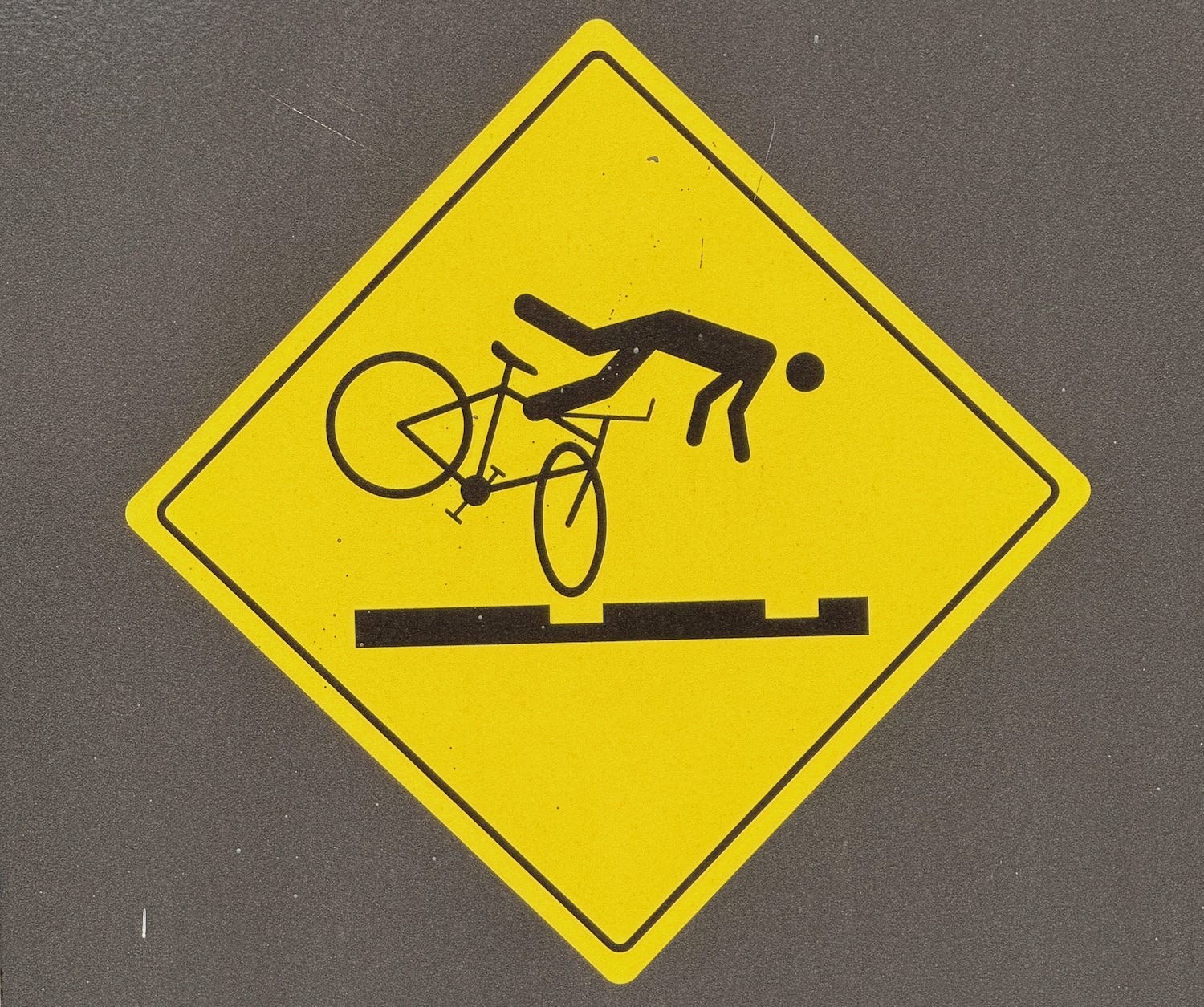
Greetings from Sydney, where cold and rain prevail, large pear-shaped men inexplicably jog shirtless and a very, very carefully brewed flat white is never more than a block away. After a week down under, instead of staying relentlessly on message—which is boring in politics and doubly so on Substack—I’d like to give you a few first, perhaps incorrect impressions of Australia’s largest city (and perhaps also its emptiest—where the hell is everyone?)
A city of solitude (at least in July)
With slightly more than 5.6 million inhabitants, Sydney is barely more populous than Melbourne, but by any big-city American standard this is a remarkably uncrowded burgh. Sydney's built-up urban area contains only about 2,000 people per square kilometer—making it a third less crowded than Los Angeles, less than half as dense as Chicago, and about 80% less crowded than New York City. Walking over the spacious walking bridges and through its residential neighborhoods made me think of that wide shot near the beginning of “28 Days Later” portraying a virtually empty downtown London.
I’m not complaining; I’m rejoicing. After 25 years living in New York, Los Angeles and the Bay Area, Sydney is a city with room to breathe. Being so unsullied by urban humanity feels rejuvenating.
Winter in July
As does Sydney’s windy, rainy winter chill, which, this being mid-July, I’m smack in the middle of. After 15 years in Los Angeles, I find the Southern Hemisphere cold and rain a welcome change. The physiology of transporting your body to a different season via a 13-hour plane ride isn’t entirely new to me.
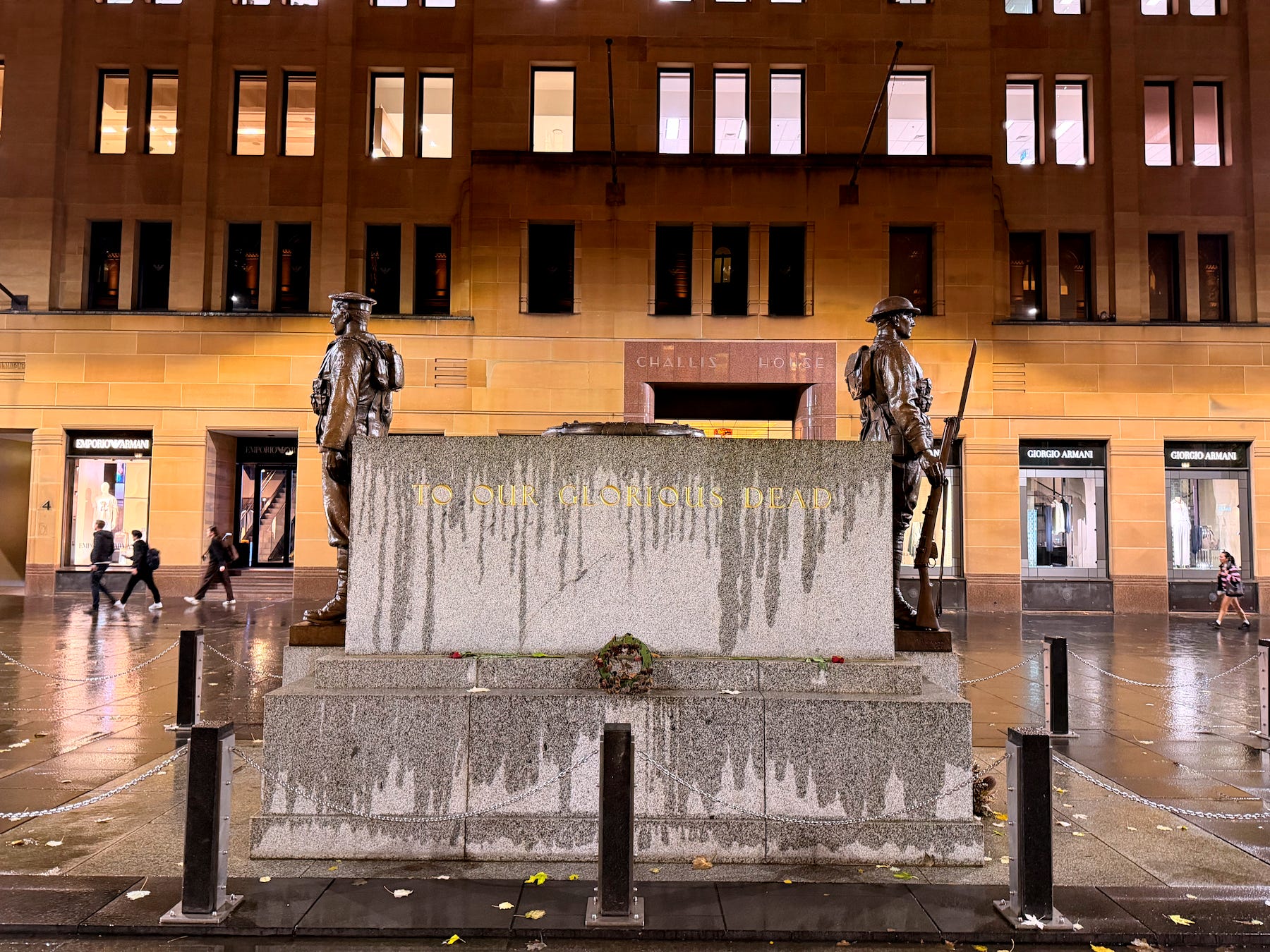
A decade ago I spent a lot of time on planes from LA to Southeast Asia, where everything is different the moment you clear airport customs and immigration. But experiencing an Anglophone population insulated by thick puffy jackets in July with monsoon-like rain swirling and then abruptly halting feels new, distinct and, in a small way, surreal.
Is there anything more Australian than ocean pools?
Along Sydney's coastline, some 30 ocean pools sit carved into the sandstone shelves where the surf breaks. By ocean pools, I mean ocean water held in outdoor swimming structures, a few feet from the roar of breaking ocean waves.
In the right lower corner of this video, recorded Sunday, you can glimpse the outlines of the ocean pool at Dee Why’s beach, north of Sydney:
First Nations people swam in natural rock pools here for generations before colonization; the built versions began appearing in the nineteenth century, when councils and community subscriptions funded seawater baths like Bronte’s, cut into the southern headland in 1887, and McIver’s at Coogee, which opened in the 1860s and remains reserved for women and children.
Olympians Fanny Durack and Mina Wylie trained in these pools before taking gold and silver in the 100-meter freestyle at the 1912 Games in Stockholm, and Depression-era relief labor built many more through the 1930s. A century on, the pools remain. Each morning, year round, swimmers descend the cliff stairs to stroke laps in water the tide replaces twice a day, while waves crash over the walls beside them.
Here’s the ocean pool at Bondi Beach, at dusk on a Sunday, with no swimmers:
Sydney’s coffee culture cures trans-Pacific jet lag
I’d heard about the city’s robust coffee obsession and figured it was hyperbole. What city, on what continent, isn’t relentlessly hailed by desperate travel bloggers for its incomparable coffee culture?
I was wrong about Sydney’s. Though not a natural-born fan of the ever-popular flat white (I’m more a three-shot, 2% latte guy), I can honestly say the coffee here, in addition to being reasonably priced, reduces jet lag by approximately…checks notes…73%, give or take. Perhaps even more impressive, though, are the baristas here. They’re chatty, make extended eye contact and seem to genuinely appreciate your business. I haven’t seen one human queue for coffee, either. There are simply too many coffee shops—and too few people per square kilometer—to cause a queue.
The large shirtless men do queue for beer, however. But that’s another story.

What are your impressions of Sydney?
I'm a Londoner who's called Sydney home for over 20 years. It's mid-winter now and it is veeery chilly at the moment, especially at 6.30am for my morning bike rides! We're actually having beautiful weather and I'm sorry if you've missed it: clear blue skies for days on end. Unfortunately the effects of climate change are very apparent in Sydney and we're having shorter, drier winters and long, very humid summers. The ocean baths and the coffee are indeed to die for, but the places that really attracted me to living in Sydney are the gorgeous, old inner city suburbs - Surry Hills (my home!), Redfern, Chippendale, Newtown, Enmore, Erskenville and so many more. They have lovely old 19th century terraced houses, some tiny older sandstones cottages, charming leafy narrow streets, countless cafes and lovely old corner pubs and restaurants. There are so many little communities to join (cycling, yoga, ballet and choir groups) and neighbours and local business owners to chat to out on the streets. Every morning I wake up and I am happy, knowing I live in Surry Hills!
I'm here to answer your question: Where the hell is everyone? Away somewhere warmer enjoying school holidays. Sydney is always quieter at this time of year I think.