


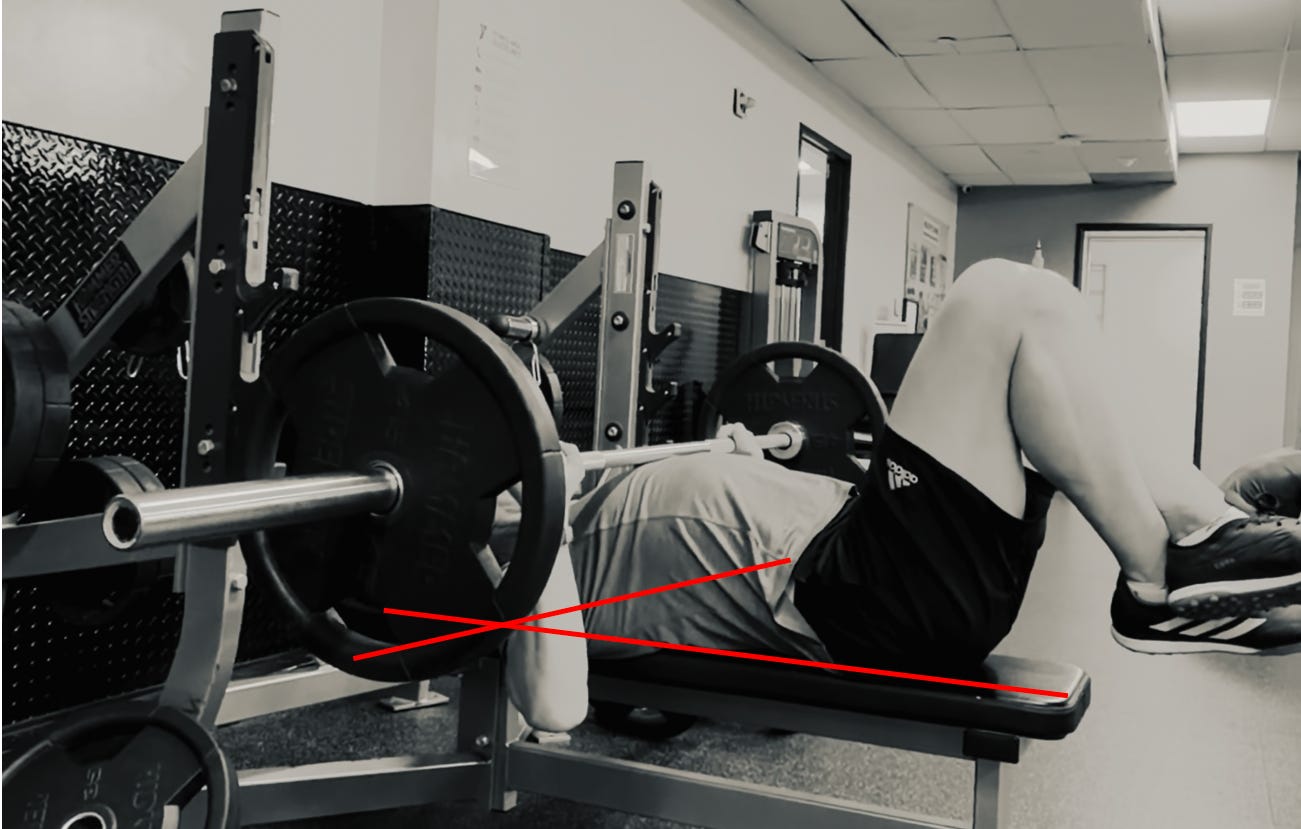
By the time I was a college sophomore, I’d worked my way up to bench pressing 295 pounds on the third set (the first two sets being warm-ups of 135 pounds x 10 reps and 225 pounds x 7). It was a big number that took years to reach. It also answered what, at that time, seemed like an important question.
“How much can you bench?”
Across species, the male gender has its performative rituals. Gorillas beat their chests. Bison ram their skulls together. Peacocks splay their tail feathers. Young men bench press. Why they do is not difficult to understand. Bench presses work the chest, shoulders and triceps in one motion. They are a staple exercise among many professional athletes and strength trainers; the NFL Combine tests prospects on how many times they can bench 225 pounds. Bench presses give your upper-body strength a universally understood number, allows you to track (or brag about) it for decades and, not least, make you look great in a t-shirt or with no shirt.
You should probably quit doing them.
The case against the barbell bench press
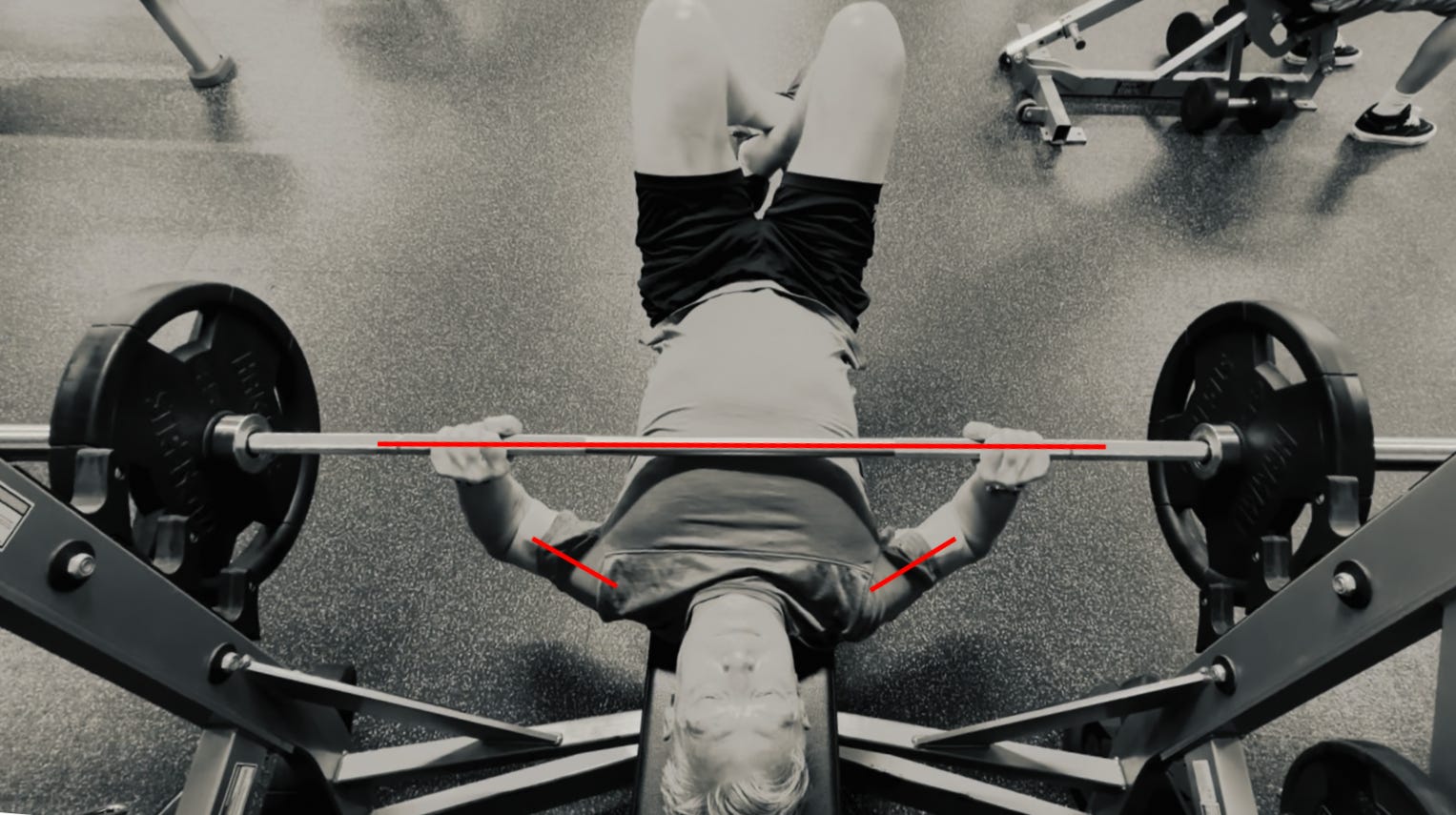
It’s pretty simple: by requiring your shoulders to accommodate the fixed-plane movement of a heavily weighted barbell, instead of making the weight follow the natural paths of each arm and shoulder, you’re stressing your AC joint and rotator cuff in ways that may well accumulate into an appointment with an orthopedic surgeon.
And the act of lowering the bar to your chest forces your elbows below shoulder level, allowing a heavily weighted bar to do a lot of silent damage over time.
Stress on the rotator cuff socket
To be sure, bench presses may seem to work just fine for years and years. But as your joints grow older, damage from the pressing exercise accumulates. Research shows that the bar pushes the ball of the arm bone backward in its socket on every bench press rep, the hardest at the bottom. The rotator cuff is resisting that weight, to keep the ball centered in the socket, which is similar in design to a golf tee—a shallow curve. Load the bar with enough weight for enough years, and the cuff becomes more likely to lose that struggle—at which point the ligaments take over, and ligaments don't recover the way muscle does.1
RELATED: A few months ago I wrote about the case for quitting bar squats, because it overloads the cervical spine and allows your weak-leg side to cheat off your strong-side leg. When you’re 25, 35, maybe even 45, you don’t pay the price. That comes later, after around 55.
Ligaments can get permanently stretched
“Ligaments are not super strong, small amounts of strain will permanently deform them,” said Alec Mckenzie, a PhD lecturer in Anatomy & Physiology at Southern Cross University in Australia and an author of a 2021 paper on the impact of shoulder hyperextension exercises like dips. “Some people push beyond their range of motion limits during these common exercises which may place strain on the ligaments, which will elongate the ligament causing instability,” he told me in an email exchange. “In exercises like the dip and bench press, the load is acting to increase this range of motion i.e., pushing the joints beyond its ‘normal’ range.”
Shoulder damage accumulates silently
That tracks with my experience. In my roughly 40 years of bench press training, at loads that ranged from very heavy to relatively easy, there was never a moment where I incurred a sudden injury. Rather, my tendons seem to have shredded and torn over time. More than any other exercise, bench presses are very likely the reason I needed surgery in my 50s to repair torn tendons in both shoulders—the left shoulder in 2017; the right one in 2025.
Shoulder trouble is one of the most common problems among long-term lifters.2
Full-thickness tendon tears are incredibly common among older athletes, studies show3. Most cause no symptoms. Until they do, including interrupting sleep and acute pain in the shoulder joints while under load. In the video below, X marks the spot where my right shoulder remains when my elbows and arms are forced to extend well below it, albeit under only 135 pounds in this case.
Don’t take just my word for it
Traditional bench press is not an upper-body strength workout to grow old with—unless you enjoy sleepless nights thanks to rotator-cuff tears, followed by months recovery time doing nothing physical after a surgical repair. Don’t take only my word for it. Here’s Mike Boyle, a former strength & conditioning coach for the NHL’s Boston Bruins, the U.S. Women’s Olympic Ice Hockey Team and the Boston Red Sox, speaking in November about limiting bench presses for college athletes and why many of the Red Sox pitchers he’s trained actively avoid the exercise.
“They did not gravitate to the barbell bench press,” Boyle says at 31:13 into the video. But they were sanguine about doing the same exercise with dumbbells, instead of a bar, Boyle added.
To build upper-body strength that doesn’t attack your shoulder cuff, tendons and ligaments, not to mention your AC joints, several other workouts, including with dumbbells instead of a bar, offer virtually the same strength gains.4 Dumbbell-focused presses also allow your left and right chest and shoulder muscles to fire independently of one another, without your strong side compensating for your weak side. (We all have physically weaker sides).
6 better alternatives to bench press for upper-body strength
If you don’t want to give up bench presses, don’t. Just don’t say you haven’t been warned of the silent tears that can build into painful ones under repeated heavy bar loads.
But if you’re ready to build upper-body strength that is more likely to give you equal gains without a surgical intervention, here are my top six workouts with video demonstrations of each and explanations why each is better than bench presses.