

Takeaways from new research on super agers & centenarians
We may not all be able to live to 85, 90 or 100, but new clues about the unique biology of those who do can provide actionable intelligence for living healthy for as long as possible.

The BLUF (bottom line up front): Research into the biology of long-living older adults reveals unique differences in so-called super agers and centenarians vs other people, and suggests what we can do to help us live longer, too.
The bodies and brains of very old and healthy people are roadmaps with some useful directions for people interested in aging with existential strength.
Two recent studies examined complementary facets of what separates so-called super agers—people who live well into their 80s in superb health—and centenarians from everyone else. Each report suggests that the biology of staying remarkably fit in body and mind may be far more flexible than most people over 50 have been led to believe.
Join me on a live chat on Wednesday, March 4, at 10am Pacific Time / 1pm Eastern Time / 6pm GMT. Join me for a lively conversation about aging, ageism, strength & fitness, food & nutrition, sleep, stress, sex, menopause (I’m not an expert but I recently interviewed someone who is), and any other subject relevant to life after 45. I’ll happily take your questions, suggestions, curses and criticisms.
Find the chat thread here: https://www.agingwithstrength.com/chat
In other words: the new science supports the idea that moving your body with purpose daily, and feeding it whole food and clocking sufficient sleep, puts you in position for maximum healthy longevity. (For paying subscribers, here are several actionable recommendations to move and feed your body like its 1899).
What the centenarian & super ager studies revealed
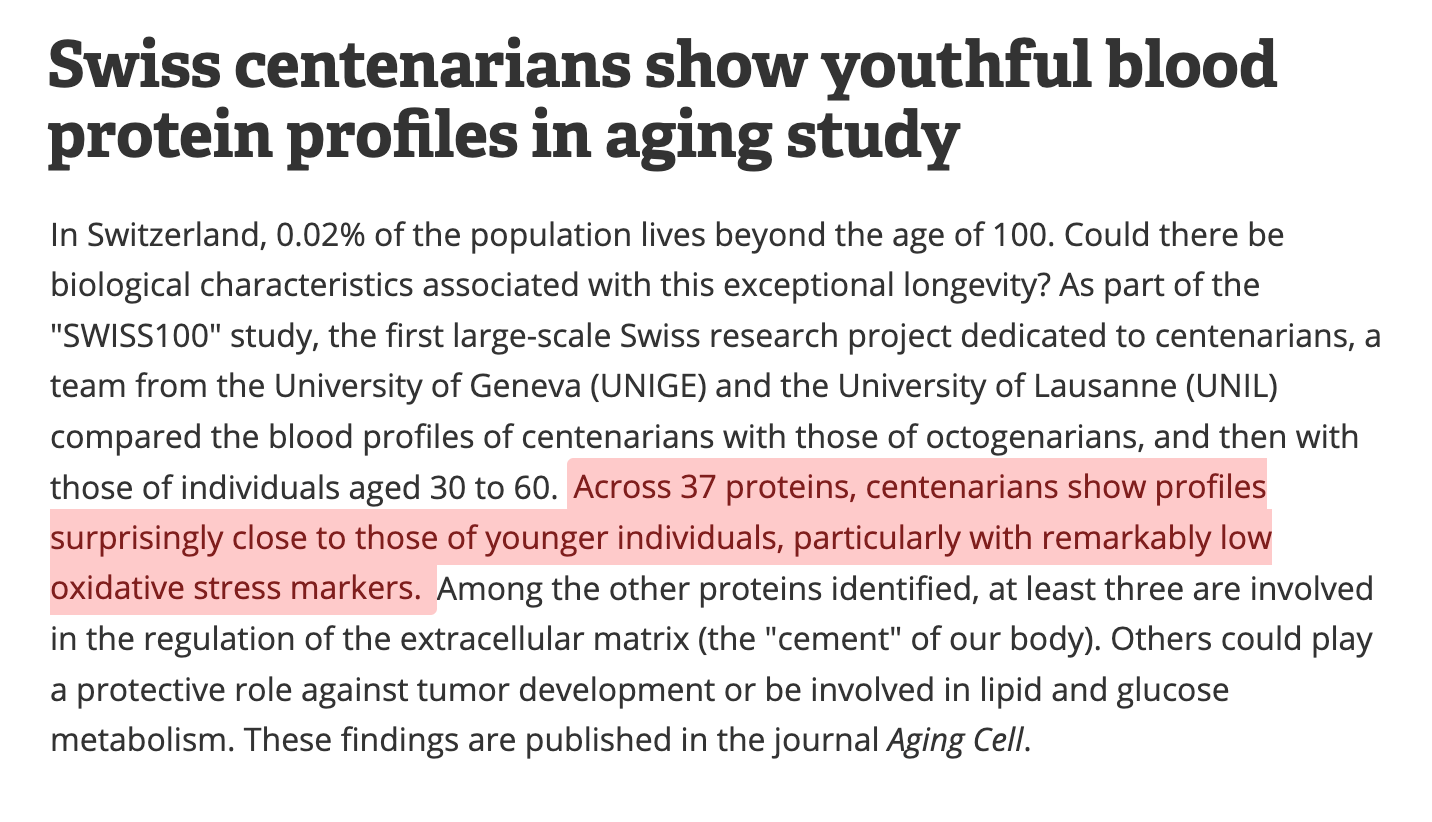
The research on Swiss centenarians (press release here; scientific paper here) finds that certain 100‑year‑olds have blood protein patterns that look more like those of middle‑aged adults.
The new examination of brain tissue taken posthumously from “super‑agers” in their 80s (decent NYT summary here; scientific paper here) finds that they made roughly twice as many new brain cells as their peers, helping them keep unusually sharp memories.
Together these findings suggest that, even very late in life, the brain and body can stay far more youthful than we once thought.
People in their 80s with exceptional memories are still growing roughly twice as many new brain cells in a key memory region as their peers, the super agers study found. The study also found that Alzheimer's leaves marks on the physical structure of brain cells before those cells even start changing how their genes behave — suggesting the disease may be taking hold earlier than previously understood.
100‑year‑olds who reach that age in relatively good shape carry blood protein patterns that look closer to those of middle‑aged adults and, fascinatingly, have significantly lower levels of antioxidant proteins than the standard geriatric population—the opposite of what one might expect, since antioxidants combat “free radicals” that damage cells, proteins, fats and DNA.
For anyone over 50, 60 or 70, that raises the stakes on unglamorous habits—how often you actually move, how hard you exercise, what you eat, how well you sleep, and whether you keep forcing your brain to learn difficult new things—because those day‑to‑day decisions appear to feed directly into the same systems that help a small minority stay sharp and physically capable deep into old age.
Put yourself in position to live healthier for longer by:
Moving your body. Every day. With purpose.
Walking every day is good. Walking briskly is better.
Three-minute mini-workouts you can do at home in street clothes with no equipment help build strength & flexibility across multiple planes of motion.
Resistance training builds muscles you’ll need.
Shopping for whole foods (ie, food that spoils if you don’t eat it) and think of eating meals based on lean meats & fish, beans & legumes, olive/avocado oil and greens.
Sleeping 7–8 hours a night, optimally on a regular schedule.
Working on one hard mental task each week (learn, practice, or memorize something new).
Practicing daily gratitude and, by all means, daily self-forgiveness.
See you on Wednesday’s live chat, if you can make it.


Paul- what can you us about mitichondrial supplements?