


The “healthy aging” conversation frequently over-focuses on physical fitness, and little wonder why: muscle strength, balance, cardio, flexibility and the things you do to acquire them make you look good and feel good. I say this as someone who’s contributed plenty (including more than 30 #WorkoutWednesday videos) to Substack’s vast library of articles on how to build physical strength.
But there are other necessary pathways to cultivate strength after 45, and one of them is curiosity. Curiosity is a powerful healthy-aging force multiplier.
1 | Why curiosity is worth cultivating, especially after 45 🤔
As a journalist, I learned first hand how much more interesting life becomes by developing, instead of suppressing, one’s childlike desire to ask people questions. The winsome quality of asking second-, third- and fourth-tier follow-up questions tends to get beaten out of most of us in adulthood — when posing an off-schedule question is too often regarded as an unfortunate lack of knowledge or propriety. This is especially true nowadays, when our communication is so often filtered through a sterile digital interface.
Let’s be less sterile and more habitually curious. The beauty of having come of age before the internet is that we learned to look at people (or call them on the telephone), to talk to them directly and to expect them to respond.
Those people expected to be talked to, asked things and be paid attention to. And possibly even asked more than one question. 🤯
Today’s preponderance of one-way communication — via text messages, emails, and the slop bucket of social media — has stunted our tendency to indulge curiosity. Curiosity, among other benefits, helps build social connections that are the proven foundation of healthy aging.
We each have a story about the positive consequences of having asked a question we almost didn’t bother to ask. Here’s one of mine:
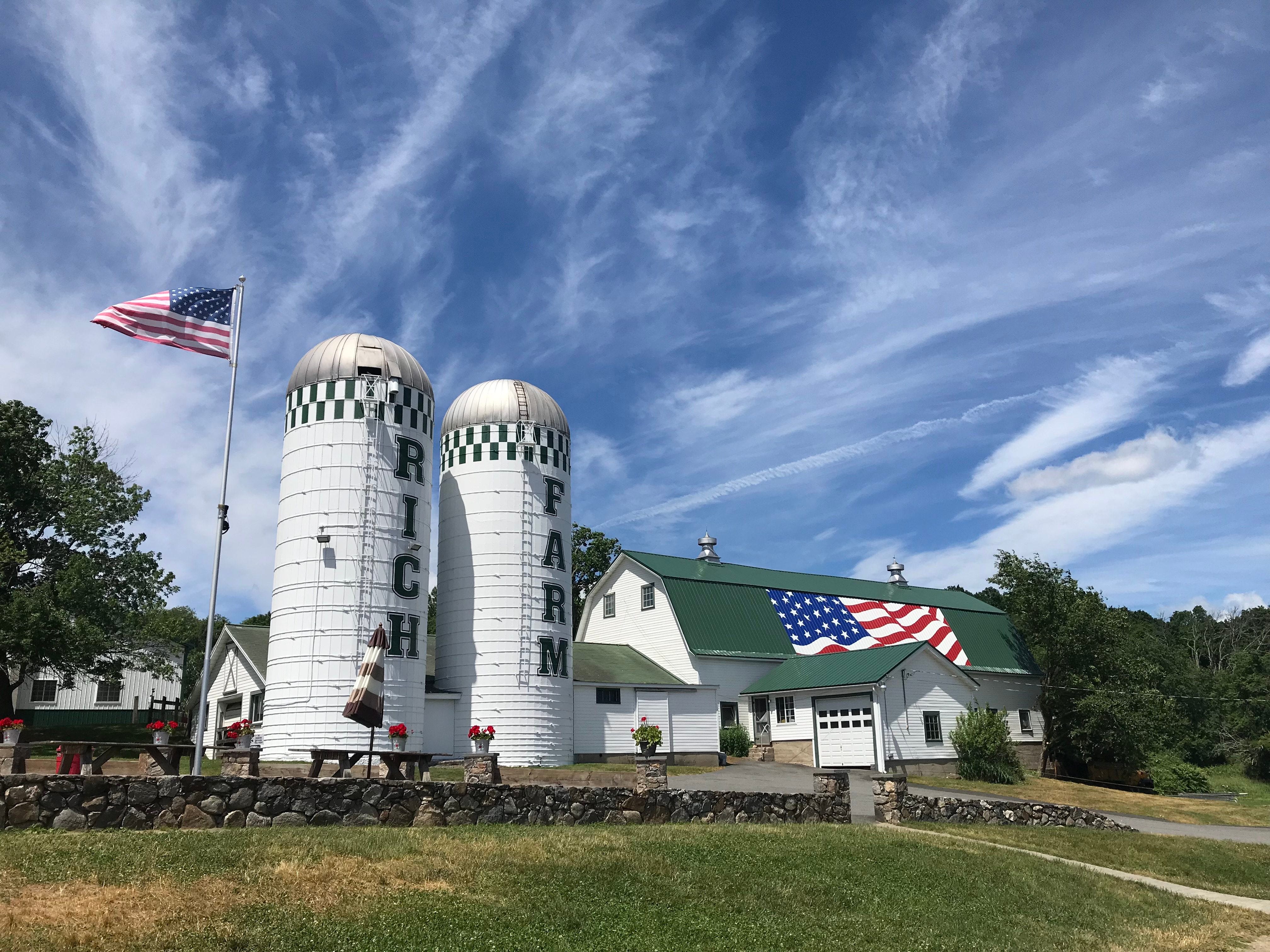
Cruising by a Connecticut dairy farm and wondering, “What the…?”
Twenty-five years ago, as The New York Times Connecticut bureau chief (which is to say, I was the chief of a one-man bureau) I decided to spend an autumn Sunday exploring the backroads north of New Haven. After almost two hours of driving, I found myself southbound on state Route 67, in Oxford, Conn., wondering why the hell I agreed to take this job when I spotted several cars conspicuously parked on the shoulder across from what looked like a farm on a hill with a gravel driveway.
I drove on. I was tired, I was hungry. I was bored. But I kept wondering: Why were so many cars parked by a grain silo?
I turned around and sped back up the road, parked and walked up the gravel driveway. The result of that simple act of reluctant curiosity was this story, which ran in the following Sunday’s paper. A week later, I checked in with the farmer, Dave Rich, who said, in his reticent manner, that the article had caused such a huge increase in his ice cream business that his financial worries were, for the time being, over.
Instead of selling to some asshole developer, Rich Farm Ice Cream Shop became a regional tourist destination and today appears to be going stronger than ever.
That’s the power of curiosity: a grumpypants newspaper reporter wonders “What the…?” and flips a U-turn to find out. I suppose my message is that we should try to flip more U-turns — actual and metaphorical — as we age into midlife and late adulthood, because that’s what makes us stay interested and, thus, interesting.
Challenge: The next time you find yourself beside an amiable stranger — in the checkout line, at the gas station, in an elevator, at the movies — find a reason to ask your fellow human a friendly question. You can even start with: “I’m trying to be more curious, so do you mind if I ask….”
The results of such acts of minor boldness are hard to overstate.
2 | Gynmast’s rings: one of the best no-weights exercises
Now, back to our regularly scheduled physical strength programming!
I recently started doing a powerfully effective one-minute daily exercise using a pair of gymnast’s rings hanging from a bar in the garage. It’s one of the best time-to-value movements I’ve found to develop noticeable upper body and core strength (by which I mean muscles) in just 60 seconds a day.
It requires having —or building — a minimum amount of triceps and shoulder strength. But the rings movements I’m talking about quickly develop those very muscles, which opens the door to other ring exercises that anyone with a little determination can do.
If you dream of having six-pack abs, this movement is for you.
Paying AGING with STRENGTH subscribers can message me or email agingwithstrength@gmail.com to get exclusive access to a 3-minute video in which I go through these ring movements, tips on proper form and how to set up rings in your own basement, den, spare bedroom or garage at minimal cost. Message or email me, and I’ll send you a private link.
3 | Remember Campbell’s “Soup is good food” campaign?
It began in the mid-1970s and endured until the 1990s. It was cheesy but effective.
This week, The Wall Street Journal took a lead pipe to that myth, deconstructing just how much ultra-processed crap is in a can of Campbell’s chicken soup. It’s not pretty.
The WSJ analysis came after a Campbell’s executive was recorded disparaging the soup as being unhealthy and for “poor people.” Campbell’s fired the executive. Which led the WSJ to report the following fact:
“Campbell’s does not use 3D-printed chicken,” the company said in a recent fact sheet about its chicken.1
A good reminder why we should do whatever we can to avoid corporate deathfood, defined as anything that wouldn’t spoil after two weeks at room temperature or that has a long list of chemical ingredients you wouldn’t find in a regular kitchen.
Here’s another good reminder: Never, ever eat a 3D-printed chicken.
https://www.wsj.com/business/campbells-fires-executive-behind-recording-that-disparaged-its-food-f058c943?st=sC2gM1&reflink=desktopwebshare_permalink
Regarding the Campbell's Soup piece, I coined an expression many years ago that speaks to this:
"If mould doesn't eat it neither should you!"
Ha. I remember reading that Times story at the time. It made me visit Rich's. I didn't know you were the author. Now I follow you for fitness advice....
Connecticut's farm culture still exists fortunately, albeit in a much smaller way. My brother gets his entire supply of milk, butter, bacon, beef, eggs from local farmers less than a 10 miles radius from his home